APS 2.0 Product Information
FAA AIP funding available
HRET and agent application trainer
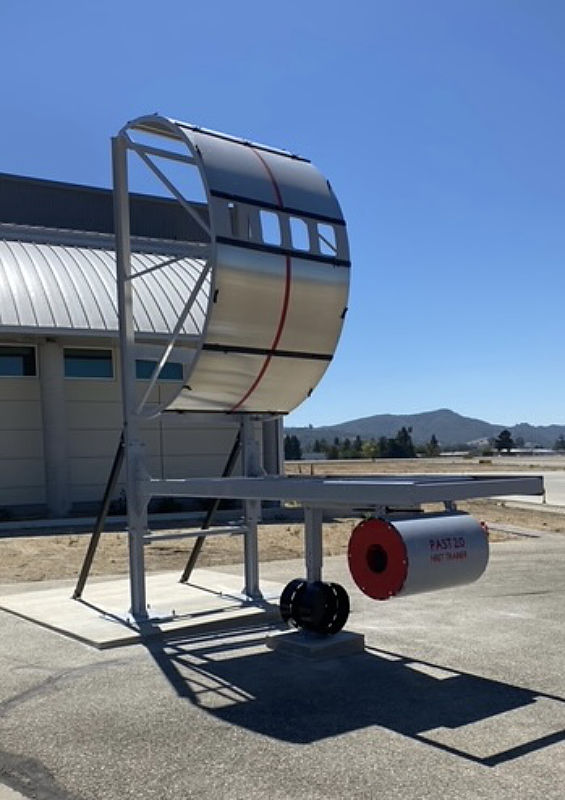
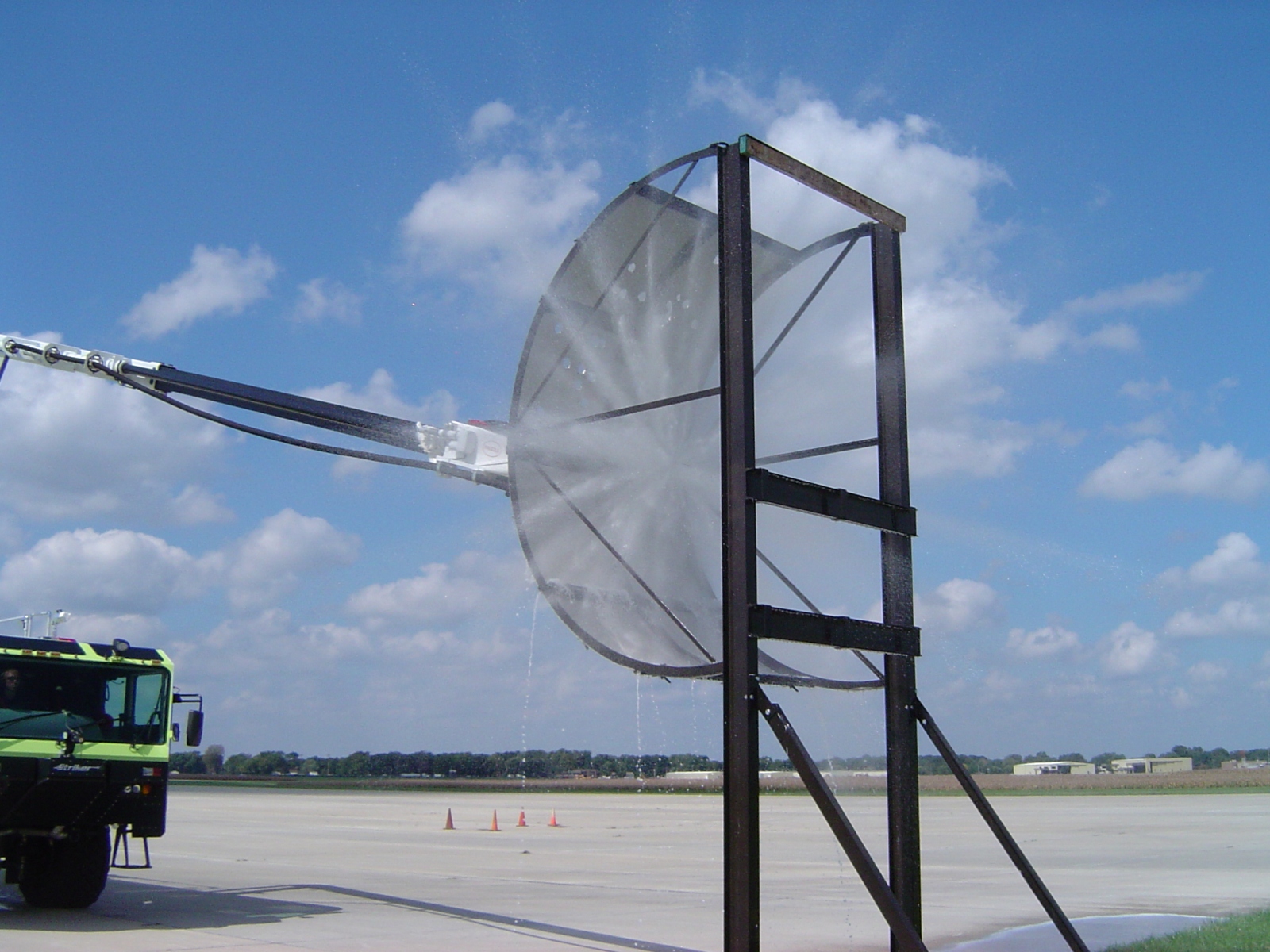
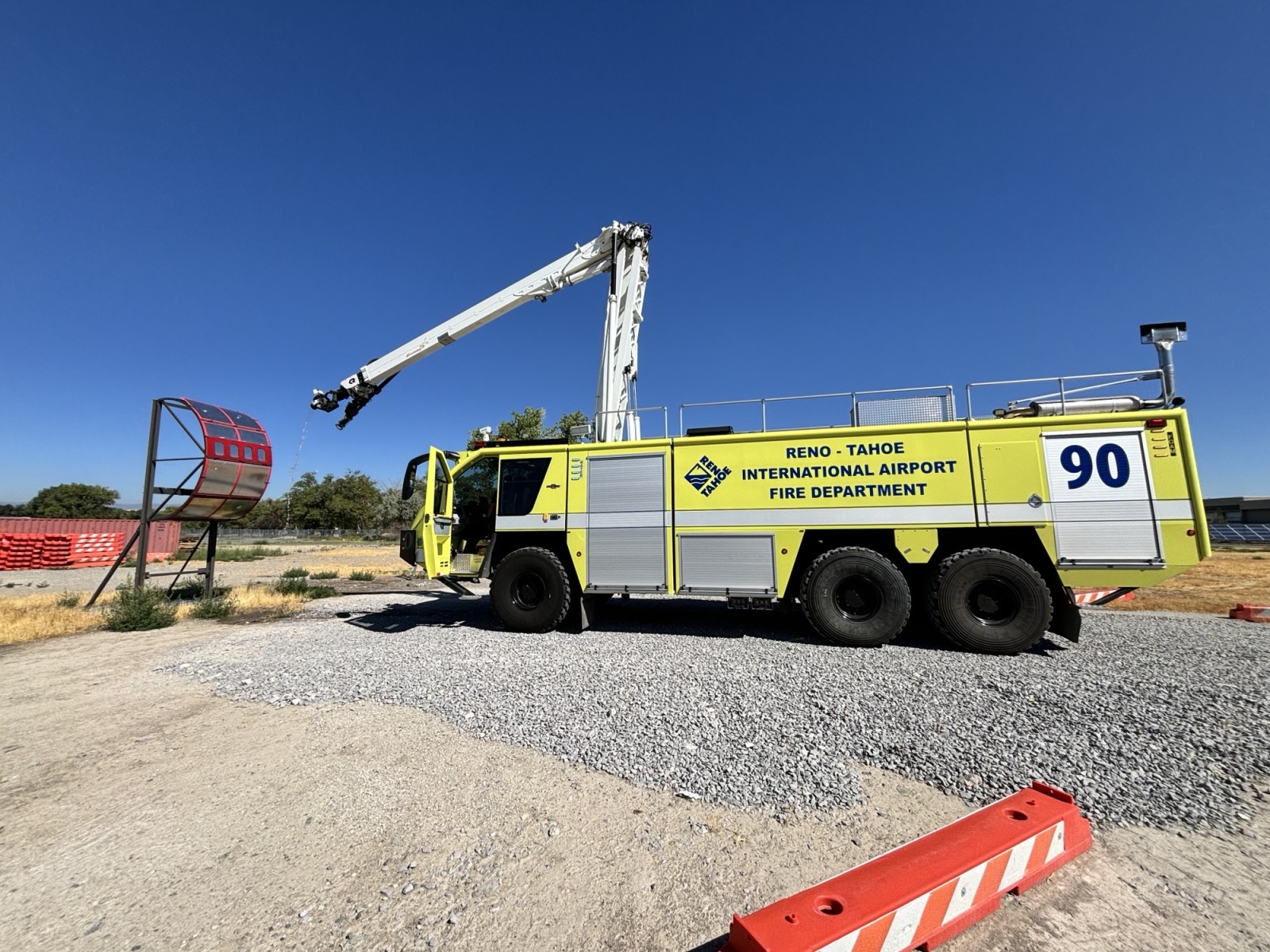
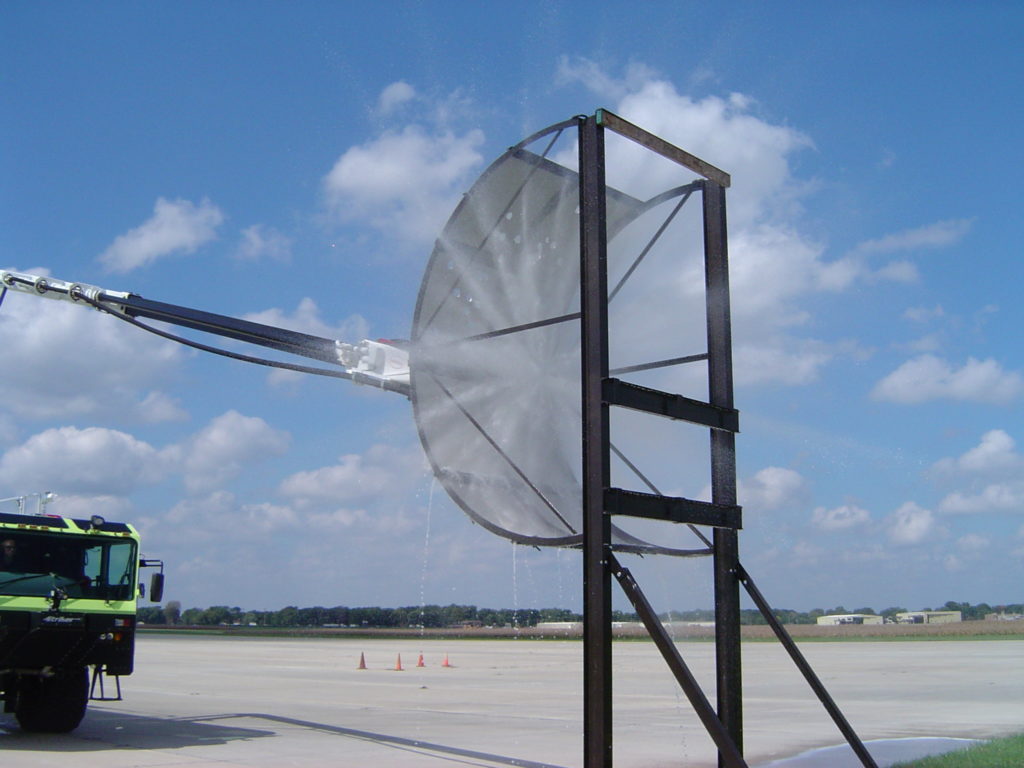
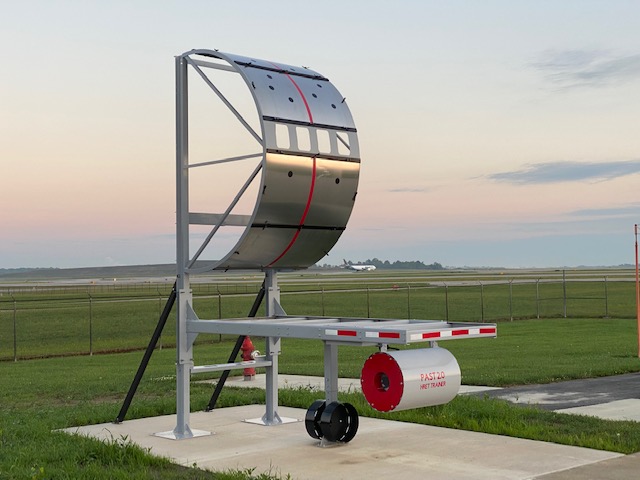
APS 2.0 is the result of years of research and development. It is a quality simulator that provides an on-site practicing tool to perfect the use of the HRET both in functionality as well as simulated aircraft skin penetration. It closely approximates the actual height, curvature, and resistance of a passenger and cargo aircraft fuselage thereby providing a very realistic HRET penetration training experience.
APS 2.0 simulator components
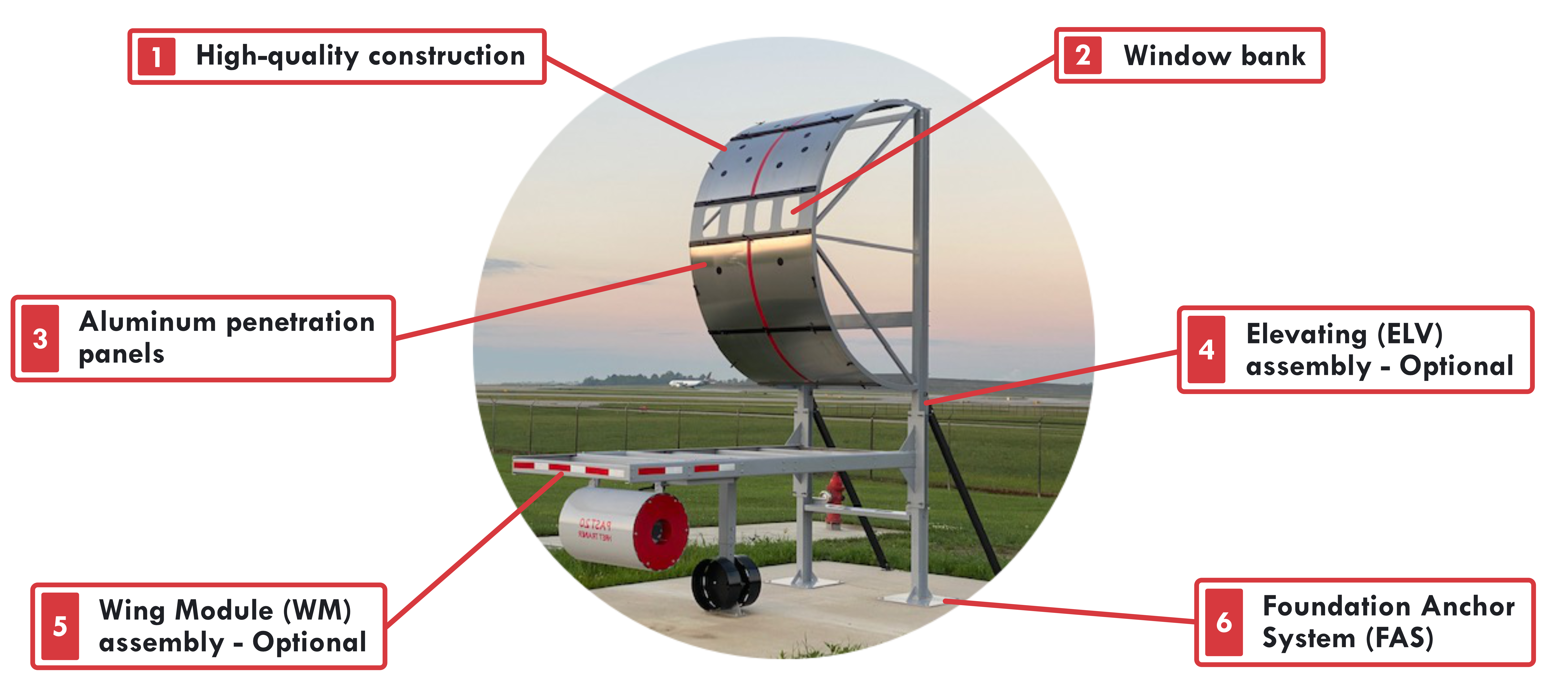


High-quality construction

Window bank
For proper training of aircraft cabin penetration

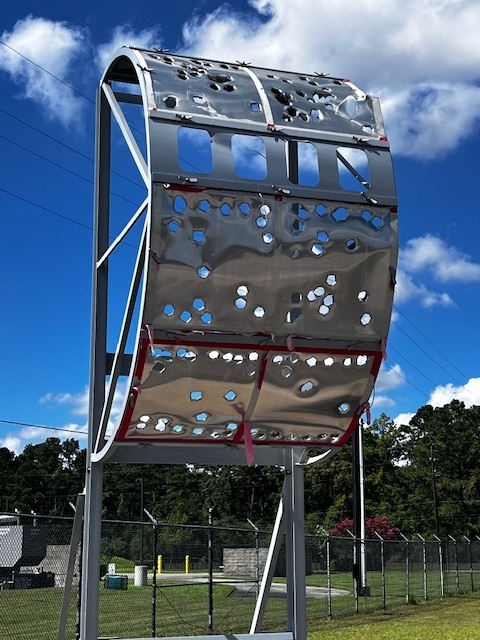
Aluminum penetration panels
Replacement panels can be requested here

Elevating (ELV) assembly – Optional
Elevates the penetrating structure to various heights: from near ground level to approximately ; includes an electrical lifting mechanism
Allows for more in-depth training for a multitude of aircraft incidents (including landing on its belly or turned on its side) and variations and makes it easier to replace the penetration panels

Wing Module (WM) assembly – Optional
Includes engine nacelle, landing gear and simulated fuel tank which can be used for simulated 3D running fuel fires, brake fires and hydraulic leaks
The fuselage, engine nacelle and landing gear have smoke grenade boxes for simulation of aircraft fire events and to practice FLIR camera operation under low visibility and night conditions
The Wing Module can also be installed as a stand-alone prop

Foundation Anchor System (FAS)
Welded steel rebar assembly that facilitates secure installation to a newly-constructed concrete foundation
Frequently Asked Questions
What are the installation requirements for APS 2.0?
APS 2.0 requires a concrete pad foundation for installation. Construction will vary depending on your climate, location and local engineering requirements.
For a new pad construction, we recommend the Foundation Anchor System (FAS) to secure the installation of APS 2.0. It is a welded steel rebar assembly that has integrated anchor bolts and is placed into the pad while the concrete is curing. It is included with the APS 2.0.
To discuss your specific install or to request the complete installation instructions, contact us.
Is FAA funding available?
JUSTIFICATION FOR PIERCING SIMULATOR
TO BE IN COMPLIANCE WITH PART 139
Justification for an HRET piercing simulator when applying for a grant or budget, the following excerpts are:
Part 139 references the airport can include a couple of sections:
§ 139.303 Personnel.
In a manner authorized by the Administrator, each certificate holder must—
(a) Provide sufficient and qualified personnel to comply with the requirements of its Airport
Certification Manual and the requirements of this part.
(b) Equip personnel with sufficient resources needed to comply with the requirements of this part.
§ 139.319 Aircraft rescue and firefighting: Operational requirements.
(i) Personnel. Each certificate holder must ensure the following:
(v) Use of the fire hoses, nozzles, turrets, and other appliances required for compliance with this part.
(vi) Application of the types of extinguishing agents required for compliance with this part.
AC 150/5210-23A Chapter 3 TRAINING
Section 3.1 General Training Background
Specifically section i and j reference the tools that may be available and potentially funded through the grant process.
Section 3.2 Proficiency and 3.3 Recurrent training
The use of a simulator or prop to maintain proficiency and provide repetitive operational training opportunities.
When utilizing AIP funds the simulator has to listed a separate line item within the
grant request for the vehicle or tool list.
For more information about FAA AIP funding, contact us.
Can I get more information about the Wing Module assembly?
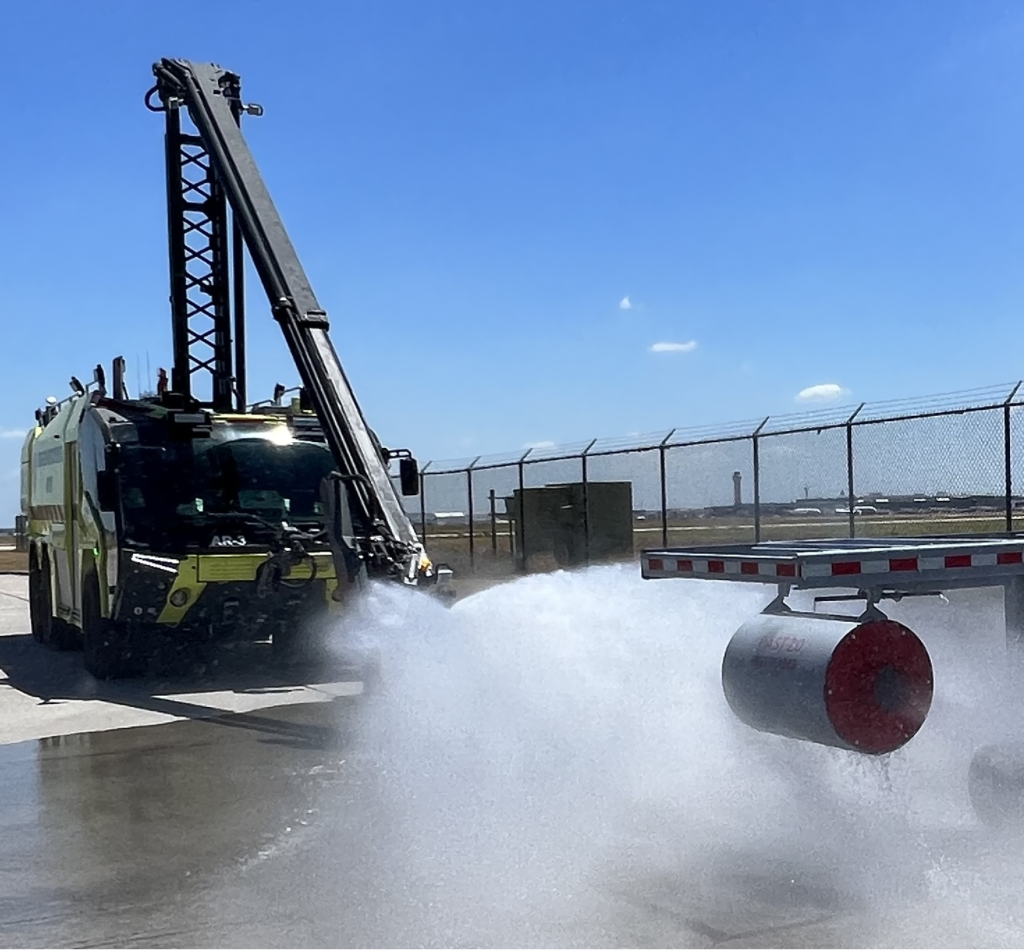
The Wing Module allows operators to practice the full range of motion and manipulation of the HRET. Lowering the nozzle to near ground level takes advantage of nozzle position and agent application efficiency. Practicing with the HRET at a lower position reinforces to the operator it’s not only for piercing,
Most importantly, it provides an opportunity to practice “standoff distance” positioning of the ARFF vehicles and makes manipulation of the HRET more challenging.
The Wing Module can be offset to either side of APS 2.0 or be used as an independent training prop.
The Wing Module will retrofit on all previous versions of APS 2.0.
What’s the warranty policy?
Airport Professional Services, LLC warrants the patented Penetration Aircraft Skin Trainer, APS 2.0 to be free from defects in materials and workmanship for a period of one (1) year from the date of delivery.
For the Complete Limited Warranty, contact us.
Why do I need PAST 2.0 if I already have a home-grown solution?
APS 2.0 is a proven training solution designed to accurately replicate real aircraft conditions during an emergency. Many of the home-grown “look alike” solutions we’ve seen have one or more of these deficiencies:
APS 2.0 addresses these issues in terms of cost savings over time, safety and training effectiveness.
APS 2.0 is designed to last a long time. It is manufactured from high quality steel and completely powder coated to withstand the elements. Many units have been in service for nearly 20 years.
What’s the difference between PAST 2.0 and previous versions of PAST?
The first generation PAST primarily focused on aircraft skin penetration. The second generation APS 2.0 advances HRET and agent application training to the next level.
APS 2.0 adds:
Can I upgrade if I have a previous version of PAST?
To upgrade your first generation PAST, purchase the red Add-On Window Panel and retrofittable Wing Module. The skin penetration panels we provide fit both the first and second generation APS 2.0.
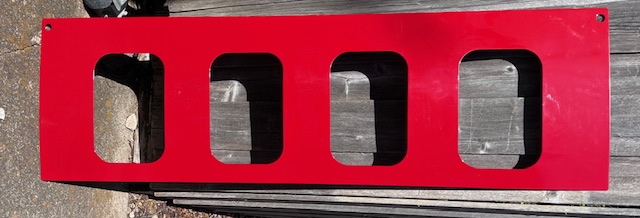
Add-on Window Panel
Contact us to discuss upgrade options.
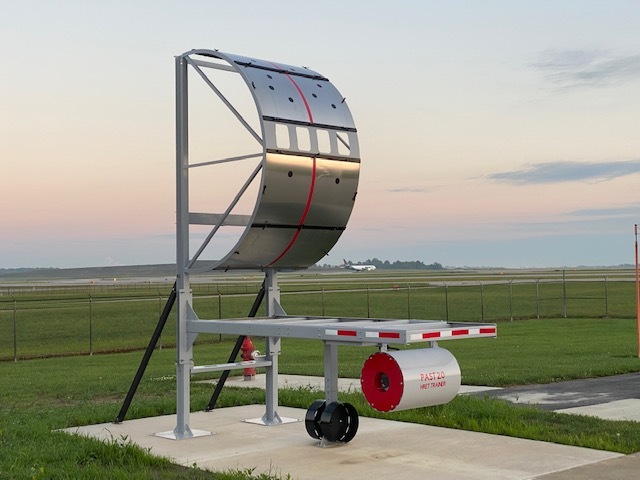
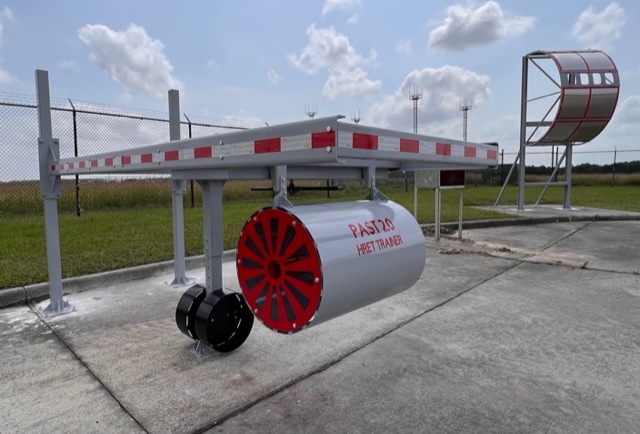
Photo gallery



OUR MISSION
Airport Professional Services is committed to providing HRET simulation tools and promoting the science of agent application efficiency
To accomplish this goal, our mission is to provide solutions that help train and prepare ARFF departments for all kinds of aircraft events with the intent of improving the overall outcome of any aircraft incident
© 2024 Airport Professional Services, LLC